
Dismantling Hegemonic Advocacy & Growing Food
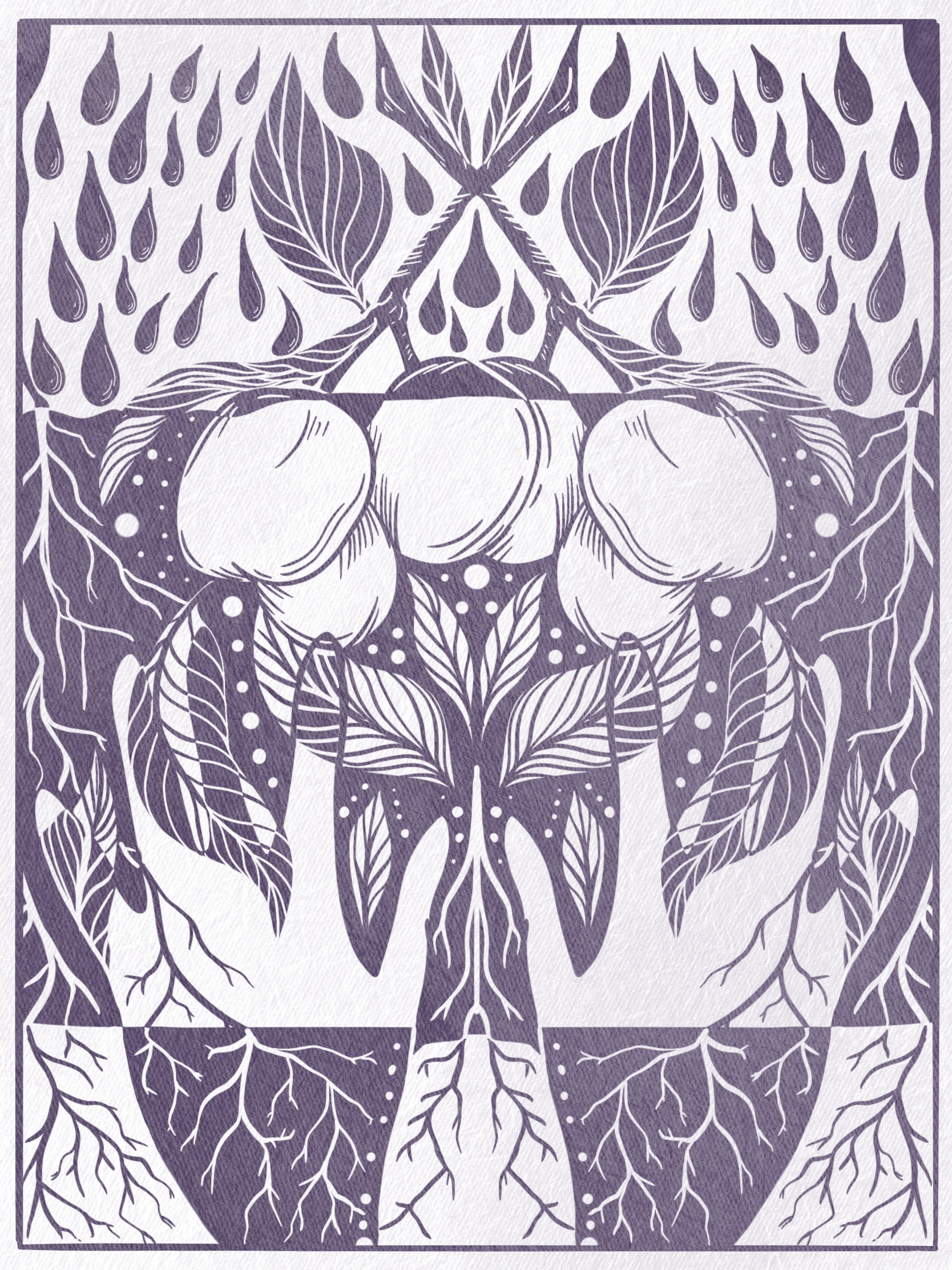
When the plum trees in my neighbour’s yard bore fruit and I could reach them from my balcony, I was thrilled about the possibility of enjoying plums for the season. I was enjoying, in all ways, the maturity of the tree. Its canopy, which covered our balcony from the summer sun, was not only fruitful, it was also full and beautiful. Still, I paid no real attention to its care.
It dawned on me later than I’d like to admit that the tree’s fruit is no more enjoyable than the garden itself, and no more enjoyable than the soil or the Earth which fed it. I enjoyed the fruit so much, I paid no attention to my neighbours who tended to the tree, or the tree which spoke to the soil, sun and neighbouring plants to bring about its fruit. Though I only ever ate a plum or two, I thanked the tree for sharing its fruit; I did not thank the tree for growing it.
It is not uncommon for us to appreciate the fruits of our attempts more than the attempts themselves. When I began growing my own plants from seed, I was more excited about the seedling than the seed, the flower than the leaves. I liked the big change, the seeming conclusion to a stage in a linear life. I failed to recognize the entirety, the circular and not at all linear process of growing food, which relies on the invisible relationships between the seed, sun, soil, rain, and, of course, myself.
Dominant food systems follow this flawed logic, which segments the labour of the land and people and requires radical transformation. We are, in our hegemonic discourse, separate from land stewardship, nature, and food; the Earth is divided into the human and non-human world. The food itself is far removed from the Earth that grew it; it is as though food appears in the grocery store by our very will, at least in the public imagination.
As you continue down this train of thought, you may feel immobilized or daunted by the work that remains to be done in building new systems. You want to make a change. You ask, How do I get the fruit?
The commonplace understanding of environmental advocacy or food justice is a very public thing; we establish through collective imagination that this is a conversation among policymakers, grocery store CEOs and greedy billionaires, which it is, in part.
We must and should hold accountable those who have sacrificed the planet and humanity for their own wealth, and we might hope this is accomplished through large interruptions. But, for the sake of this conversation, I am looking to those who may be debilitated by the belief that large-scale change occurs exclusively through large-scale action. A movement becomes burdened by the belief that the fruit is alienated from the seed.
It is reductive to assume that advocacy occurs only in ways that require a tremendous amount of resources and, therefore, tremendous access to the time, space and capital necessary to mobilize on a grand scale. Advocacy as a concept can become regressive within this belief, as we fail to bear witness to the incredible shifts made not overnight, but in daily conversation. These are not conversations that we may associate with the public; instead, they might be at the dinner table. It is the conversations which occur in spaces that are more accessible to engage in meaningfully and with resistance because they are intimate and sheltered as much as possible from the rhetoric of domination. Our relationships are sites of radical cultural exchange; they are the beginning of social movements.
Let’s say we ignore all that and we choose to highlight conventional advocacy (that is, the hegemonic understanding of advocacy), which is very much public, often large-scale, and organized. We become excited by the visual display of a movement’s momentum and even more so when this momentum achieves a group’s intended goal. We could call this the harvest of a movement, the fruit which we dig our teeth into and claim the reward. How sweet, we might say.
We can begin to see the issue with the association of advocacy with the fruit of movements when we ask ourselves to do it again. The work is not done, just yet. Our seed, the source of advocacy, has been forgotten, and we’ve discredited the soil and the sower alike. We’ve said the conversations made in the most accessible spaces are unimportant; conversation is only talk, after all.
But it is not true that conversation is “only talk.” As we continue the process of cultural exchange and change the minds of one another, we tend to the roots of our beliefs. We build values, understandings, and shifts across generations. Conversation is the unpaid labour that will one day bear fruit, but that will not be met with collective praise. We’ll just be excited about the fruit.
As such, when we’re asked to continue the work we did not see or appreciate, we’ll be destabilized once more by the belief that we must bring the fruit to life. We have no sense of how to do so, how to make significant structural change, how to birth a fruit from nothing.
If we believe that the effort is in making a fruit appear, we will have no choice but to surrender our efforts to magic. We know that we cannot possibly manifest a fruit without the invisible work of which we know nothing. We may hold up our hands and lend our frustrations to the void; we may reduce our agency to nothing. We believe advocacy is impossible for us, for policy heads and career bureaucrats, or occurs only in wild, grand-scale interruptions. But it is the anti-violent, embodied efforts of education, learning from one another, and restoring relationships with our worlds, that remind us that we cannot manifest a radically different world without radically different beliefs in our relations.
We must relate through love and love’s toughness and gentleness all the same and become stewards both to the possibility of the fruit and the fruit itself. We must value our conversations, as I believe the very act of communicating is the root of all living things. This way, we not only become stewards of the environment but of cultural change.
These intimacies reduce a very malignant form of environmental violence, which otherwise manifests as our perceived alienation. The consequence, our sense of defeat, comes to salt the earth. So, too, does it salt our chances of hope or any interest one may have in the world or our food. With it, we remain disconnected.
We must participate in these conversations because they are the natural thing to do; to relate, to nurture our private worlds with new possibilities. The truth is, there is no seed independent of its flower, nor is there alienation in non-human ecosystems; the unseen words connect us, the unseen words someday bear fruit.


Leave a Reply